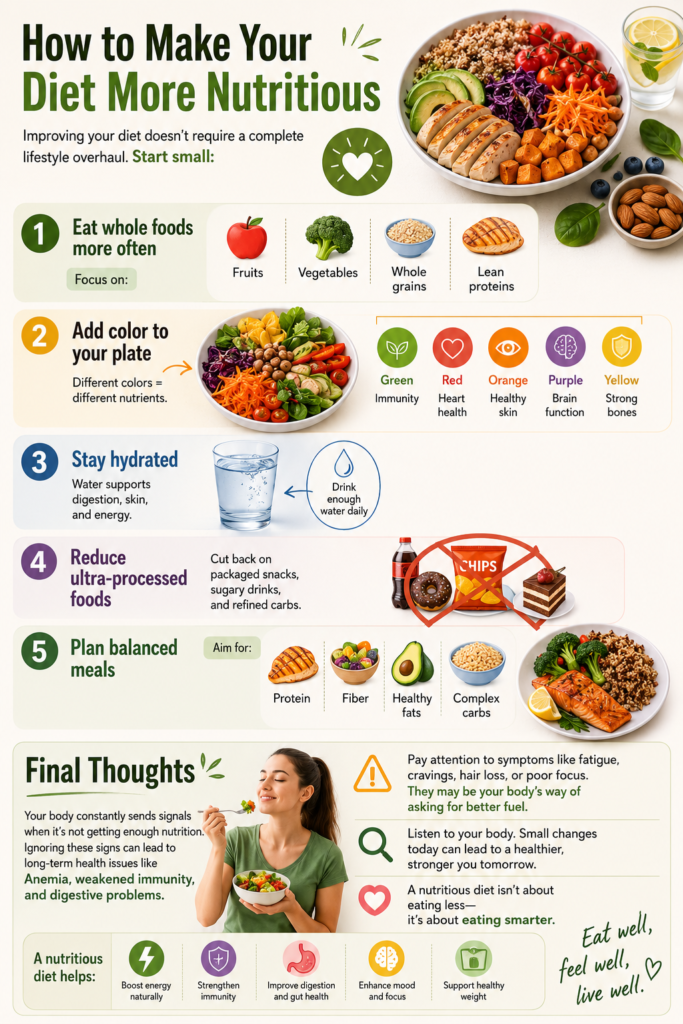
In a world where convenience often wins over quality, it’s easy to overlook what your body is really asking for. Many people eat enough calories every day but still miss out on essential nutrients. This is called hidden hunger—when your body lacks vitamins, minerals, and proteins even though you’re eating regularly.
If you constantly feel tired, sick, or mentally drained, your daily diet might be the reason. Here are 7 common signs your body needs more nutritious food, along with practical ways to improve your eating habits.
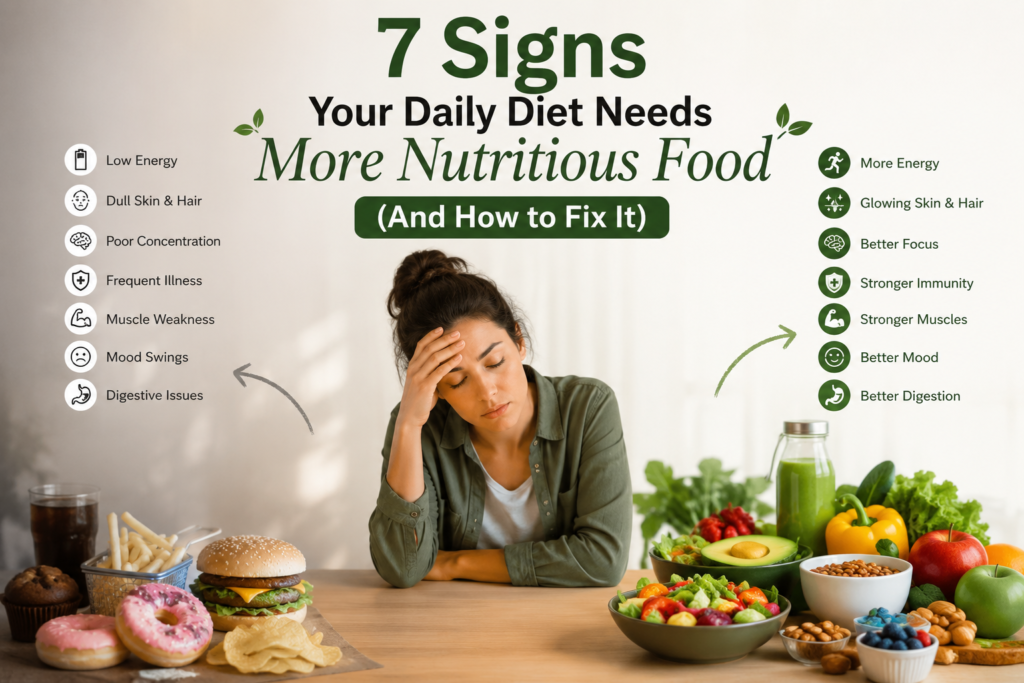
1. Constant Fatigue and Low Energy
Micronutrient deficiency is one of the most common reasons behind persistent fatigue.
If you often feel tired even after a full night’s sleep, your body may be lacking:
- Iron
- Vitamin B12
- Magnesium
- Complex carbohydrates
A nutrient-poor diet can reduce oxygen flow in your blood and affect energy production.
How to fix it:
Include:
- Leafy greens
- Eggs
- Lentils
- Nuts
- Whole grains
External Authority Link:
National Institutes of Health (Iron Facts)
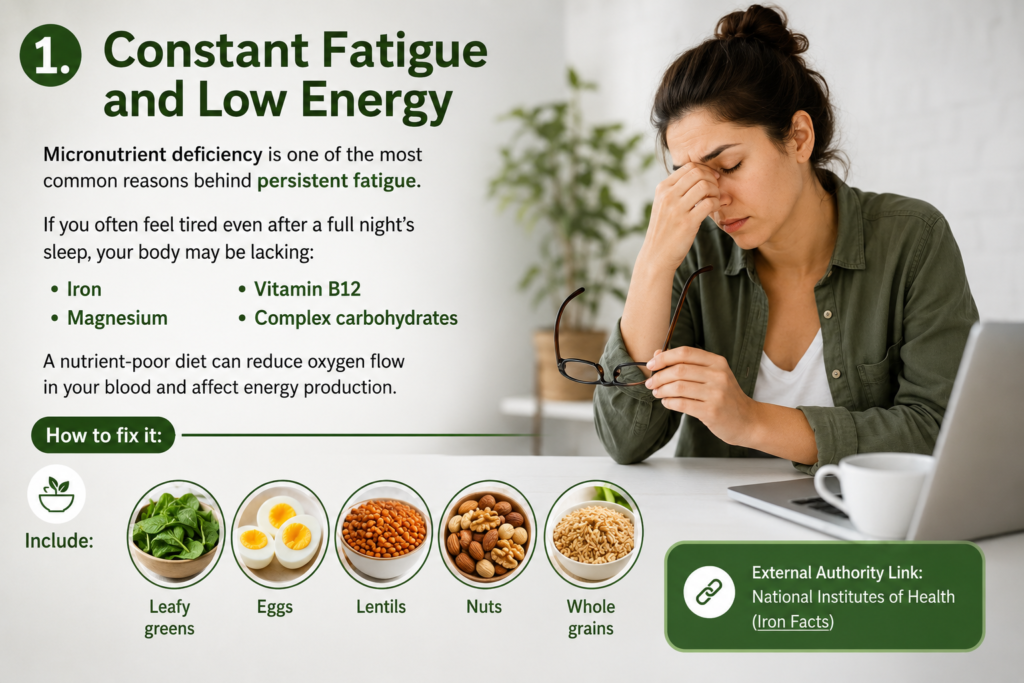
2. Frequent Illness or Weak Immunity
Getting sick often can indicate a lack of immunity-boosting nutrients like:
- Vitamin C
- Vitamin D
- Zinc
- Protein
Your immune system depends heavily on proper nutrition.
Foods like citrus fruits, yogurt, seeds, and fish can strengthen immunity.
Related Read:
Internal Link:
→ Top Foods That Naturally Boost Immunity
External Link:
World Health Organization (Healthy Diet)
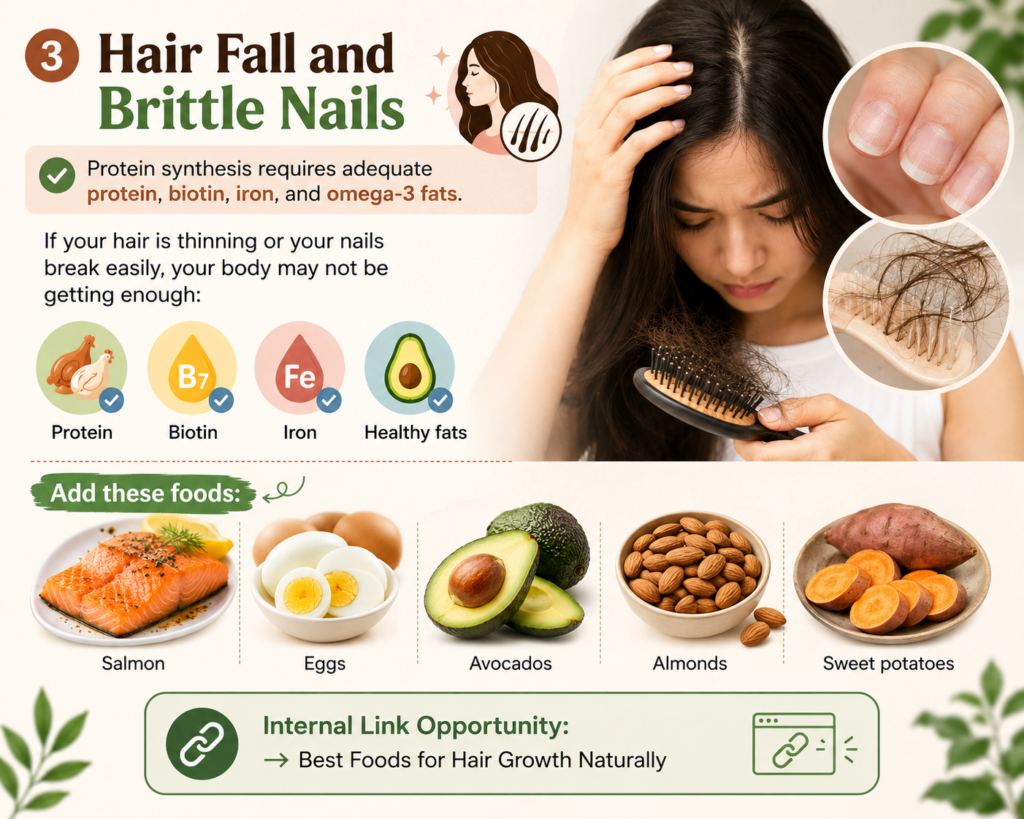
3. Hair Fall and Brittle Nails
Protein synthesis requires adequate protein, biotin, iron, and omega-3 fats.
If your hair is thinning or your nails break easily, your body may not be getting enough:
- Protein
- Biotin
- Iron
- Healthy fats
Add these foods:
- Salmon
- Eggs
- Avocados
- Almonds
- Sweet potatoes
Internal Link Opportunity:
→ Best Foods for Hair Growth Naturally
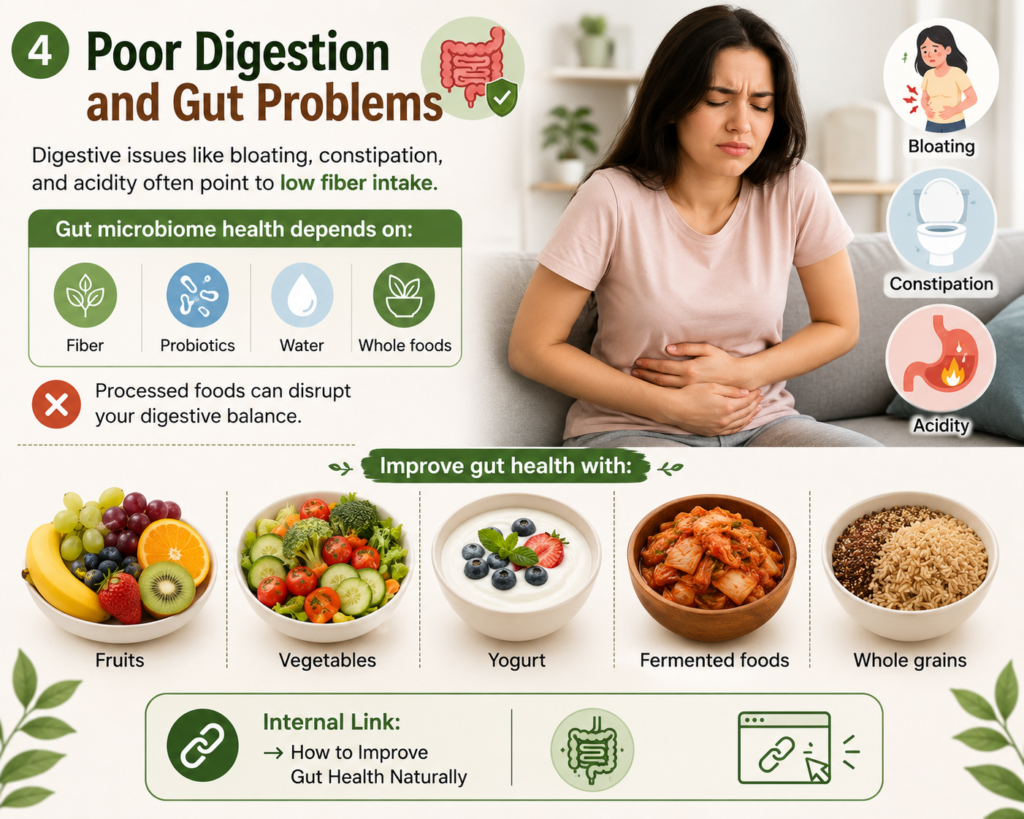
4. Poor Digestion and Gut Problems
Digestive issues like bloating, constipation, and acidity often point to low fiber intake.
Gut microbiome health depends on:
- Fiber
- Probiotics
- Water
- Whole foods
Processed foods can disrupt your digestive balance.
Improve gut health with:
- Fruits
- Vegetables
- Yogurt
- Fermented foods
- Whole grains
Internal Link:
→ How to Improve Gut Health Naturally
External Resource:
Harvard T.H. Chan – Fiber Guide
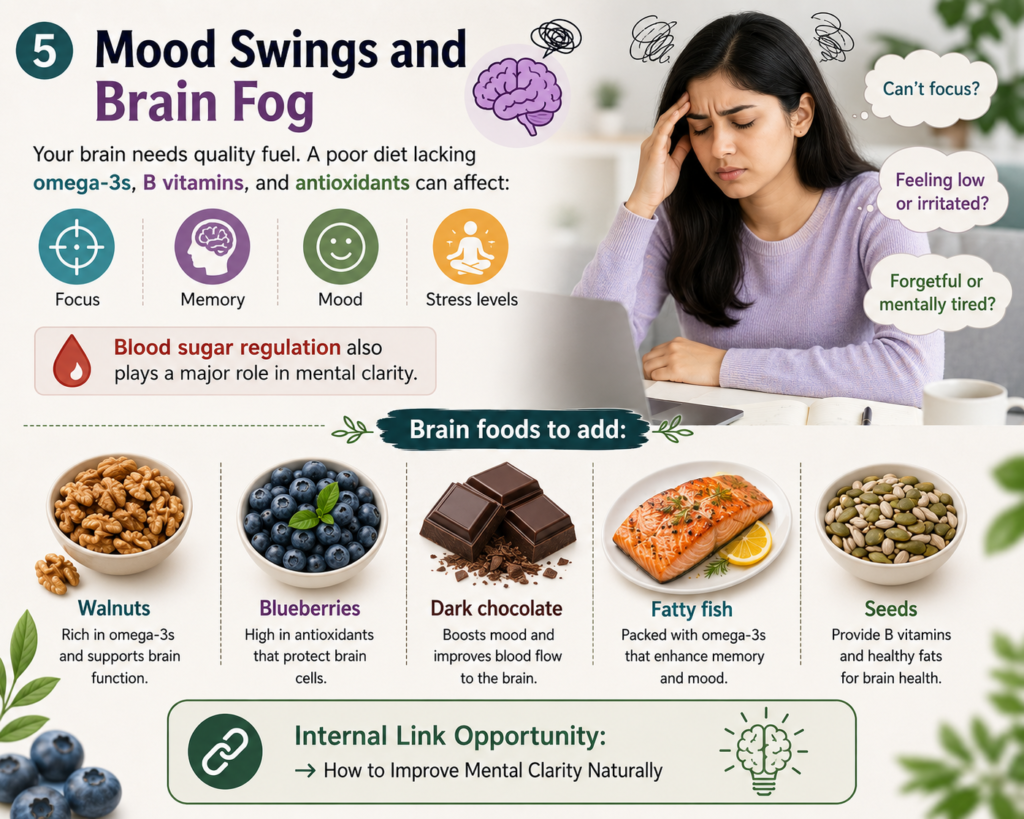
5. Mood Swings and Brain Fog
Your brain needs quality fuel. A poor diet lacking omega-3s, B vitamins, and antioxidants can affect:
- Focus
- Memory
- Mood
- Stress levels
Blood sugar regulation also plays a major role in mental clarity.
Brain foods to add:
- Walnuts
- Blueberries
- Dark chocolate
- Fatty fish
- Seeds
Internal Link Opportunity:
→ Foods That Improve Brain Function and Focus
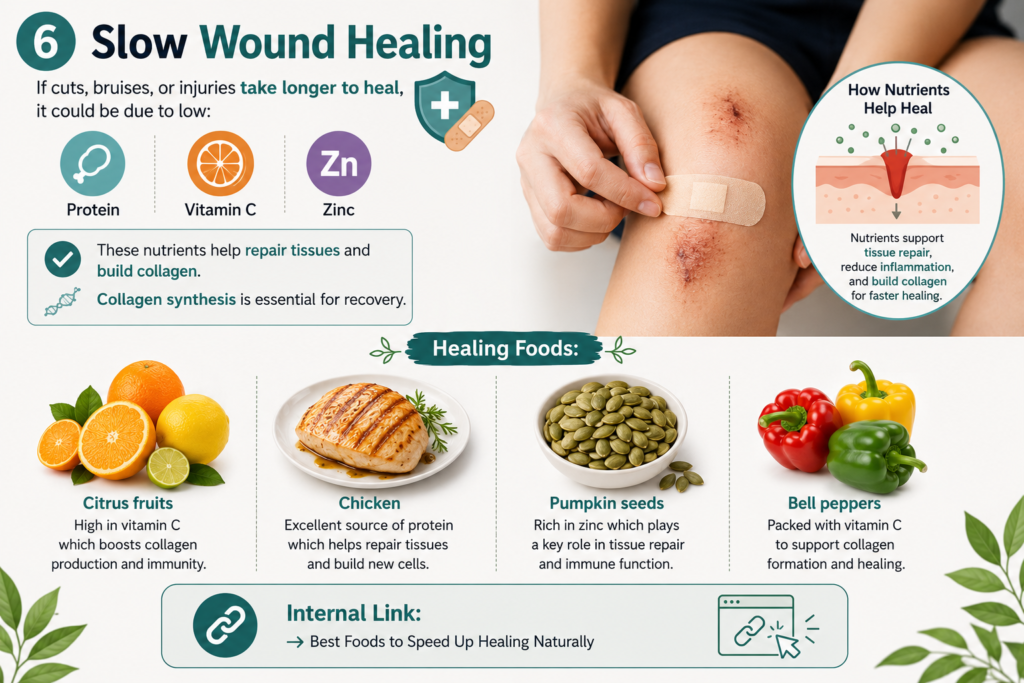
6. Slow Wound Healing
If cuts, bruises, or injuries take longer to heal, it could be due to low:
- Protein
- Vitamin C
- Zinc
These nutrients help repair tissues and build collagen.
Collagen synthesis is essential for recovery.
Healing foods:
- Citrus fruits
- Chicken
- Pumpkin seeds
- Bell peppers
Internal Link:
→ Best Foods for Faster Recovery and Healing
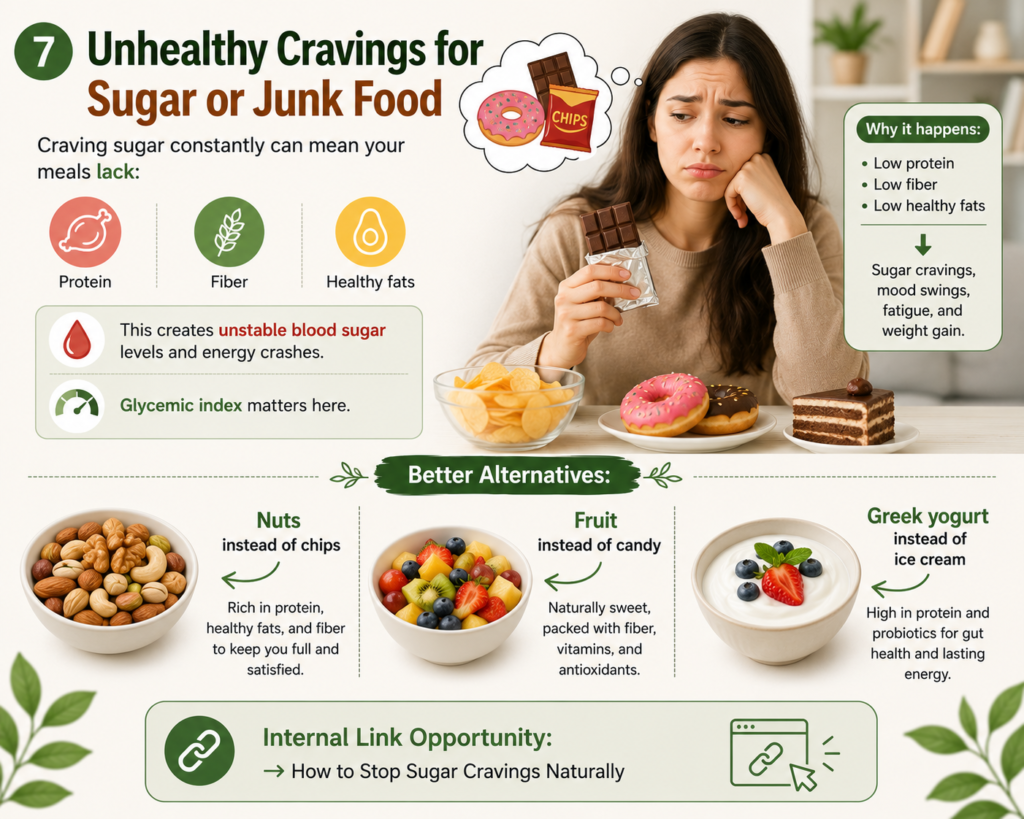
7. Unhealthy Cravings for Sugar or Junk Food
Craving sugar constantly can mean your meals lack:
- Protein
- Fiber
- Healthy fats
This creates unstable blood sugar levels and energy crashes.
Glycemic index matters here.
Better alternatives:
- Nuts instead of chips
- Fruit instead of candy
- Greek yogurt instead of ice cream
Internal Link Opportunity:
→ Healthy Snack Alternatives for Weight Loss
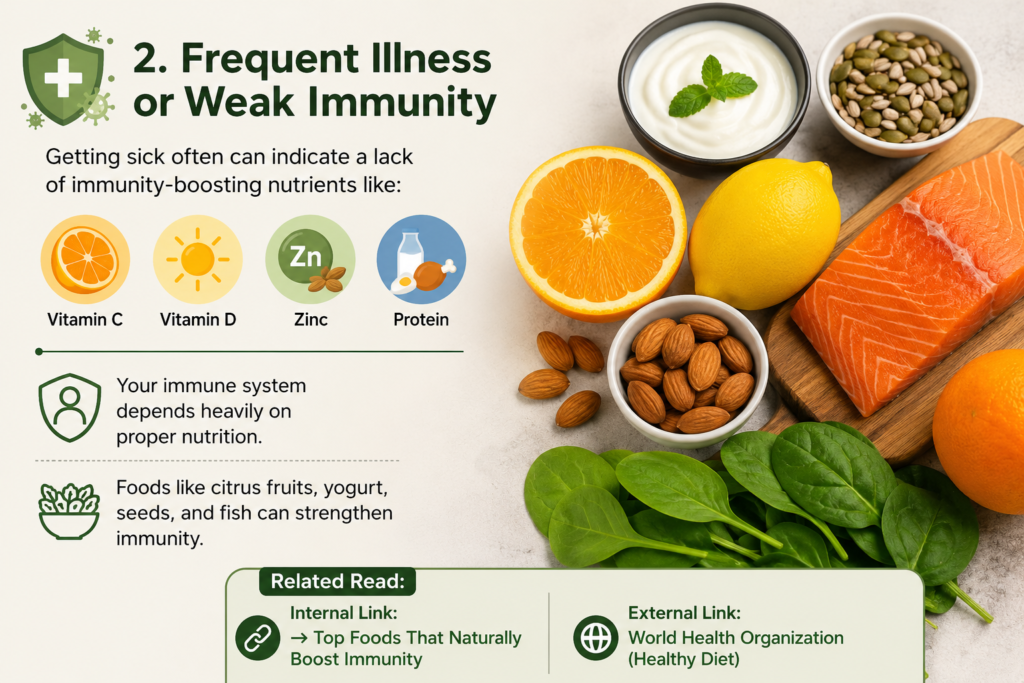
How to Make Your Diet More Nutritious
Improving your diet doesn’t require a complete lifestyle overhaul. Start small:
1. Eat whole foods more often
Focus on:
- Fruits
- Vegetables
- Whole grains
- Lean proteins
2. Add color to your plate
Different colors = different nutrients.
3. Stay hydrated
Water supports digestion, skin, and energy.
4. Reduce ultra-processed foods
Cut back on packaged snacks, sugary drinks, and refined carbs.
5. Plan balanced meals
Aim for:
- Protein
- Fiber
- Healthy fats
- Complex carbs
Final Thoughts
Your body constantly sends signals when it’s not getting enough nutrition. Ignoring these signs can lead to long-term health issues like Anemia, weakened immunity, and digestive problems.
Pay attention to symptoms like fatigue, cravings, hair loss, or poor focus. They may be your body’s way of asking for better fuel.
A nutritious diet isn’t about eating less—it’s about eating smarter.